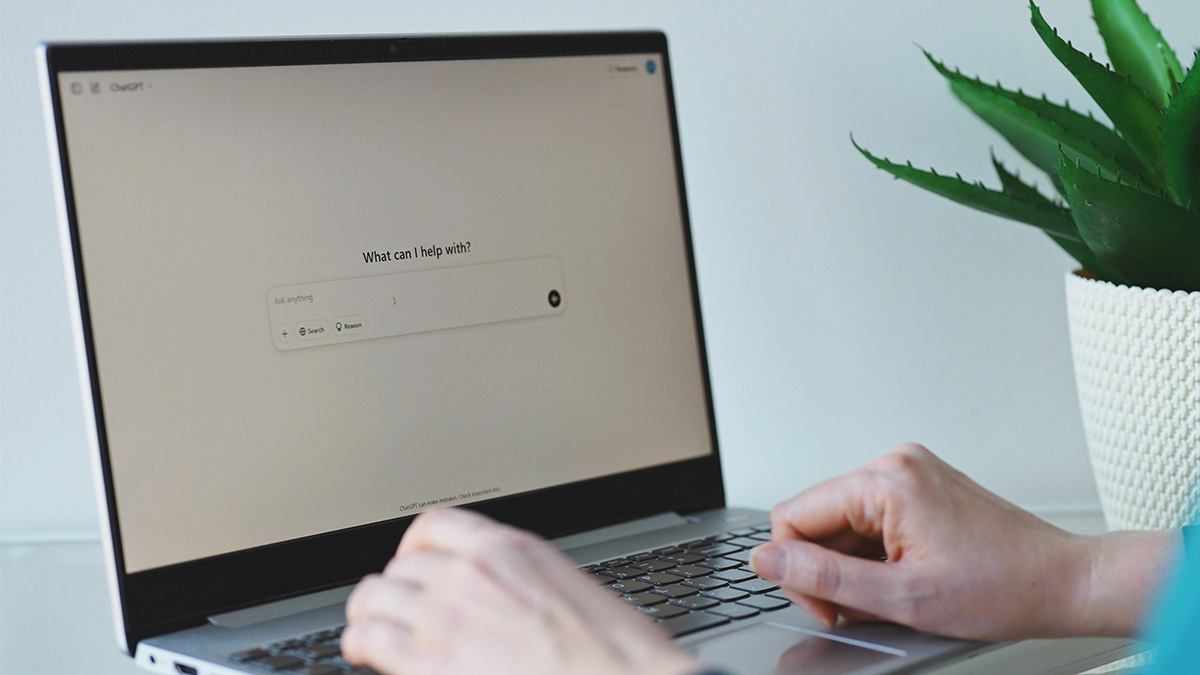
- Content creators, writers and even a TEDx speaker have been running “I let AI plan my week” experiments, using tools like ChatGPT and AI calendars to schedule everything from deep work to date nights. Class Centra
- A 2025 Medium wave of “I let ChatGPT/AI plan my week” stories reports similar outcomes: more structure and productivity, less planning stress – but also friction around spontaneity and weird recommendations. Medium
- Business Insider recently documented a full week where ChatGPT (using OpenAI’s agent features) managed a writer’s social life, booking reservations, replying to texts and choosing outfits – freeing them from logistics but not from the need for human judgment. Business Insider
- In large-scale real‑world data, Anthropic estimates that AI can reduce task completion time by about 80% across 100,000 real conversations, potentially doubling US labor‑productivity growth if widely adopted. Anthropic
- A Harvard/BCG field experiment found consultants using ChatGPT completed 12.2% more tasks, worked 25.1% faster, and produced 40% higher‑quality results than those without AI. marketingaiinstitute.com
- Surveys show everyday users already feel the time savings: a St. Louis Fed study found generative‑AI users save about 2.2 hours per week on average, while BCG reports about half of employees save at least five hours weekly using GenAI at work. St. Louis Fed
- Professionals expect even more: a Thomson Reuters survey suggests many believe AI could free up 4 hours a week next year and 12 hours a week within five years. Thomson Reuters
- Psychologists describe “planning fatigue” and “decision fatigue” as real cognitive drains; one clinical psychologist notes that planning fatigue “is settling in because having to plan our every move goes against how the unconscious brain has evolved.” Psychology Today
- The Stanford 2025 AI Index reports 78% of organizations were already using AI in 2024, up from 55% the year before, and confirms that “a growing body of research” finds AI boosts productivity and narrows some skill gaps. Stanford HAI
- Experts warn against blind trust: when generative AI is used on tasks it’s bad at, worker performance can actually drop, highlighting the need for guardrails and human oversight. MIT Sloan
I gave my week to AI. Here’s how it went.
From YouTube thumbnails (“I let AI plan my life for 7 days!”) to TEDx talks and Medium confessionals, handing your life to an algorithm for a week has become a very 2025 kind of self‑experiment. Medium
So I decided to do it too.
For one full week, I asked an AI assistant to:
- Build my entire weekly schedule
- Time‑block work, exercise, meals and downtime
- Suggest social plans and even small rituals like reflection blocks
Think of it as a hybrid between a life coach and a slightly bossy calendar app.
I didn’t just want a cute story. I wanted to know:
If AI plans your entire week, does your life get better, more efficient – or just more robotic?
Below is what happened, how it lines up with current research, and what you should (and definitely shouldn’t) copy if you’re tempted to let AI plan your own week.
The setup: turning AI into a weekly “super‑planner”
1. Choosing the AI stack
- Brain: a general‑purpose LLM (like ChatGPT, Claude, or Gemini) to design the weekly plan, set priorities, and adjust based on feedback.
- Calendar muscle: an AI‑assisted calendar/time‑blocking tool (think Motion, Reclaim or similar), which automatically reshuffles tasks around meetings and deadlines. Reviews note that these apps combine deep calendar sync with prioritization algorithms that constantly re‑block tasks into the best available slots. efficient.app
This matches what productivity writers describe as a “stack”: a conversational AI to think with you, plus automation to actually enforce the schedule. efficient.app
2. Giving AI a brief (not blind control)
- Goals: Ship one major work project, exercise four times, and be less exhausted by Friday.
- Constraints:
- Wake up no earlier than 6:30 a.m.
- No work after 8:00 p.m.
- At least one fully unstructured evening.
- Non‑negotiables: Existing meetings, family commitments, and a social event on Saturday.
Then I used a prompt along these lines:
“Act as my weekly productivity coach. Design a realistic, sustainable 7‑day plan that maximizes deep work, protects my mental health, and includes exercise and rest. Use time‑blocking, and assume I work roughly 9–5. Ask clarifying questions only if truly necessary.”
Within seconds, the AI produced a week that looked suspiciously like the life I always intend to live but rarely manage:
- Morning deep‑work blocks
- Mid‑day admin and calls
- Short breaks baked in
- Evenings protected for rest or low‑stakes creativity
- Week‑end “flex structure” instead of a rigid checklist
If you’ve read any of the recent “I let ChatGPT plan my week” diaries, this structure will feel very familiar. Medium
What the AI‑planned week felt like (day‑by‑day themes)
Rather than dump a play‑by‑play, here’s the emotional arc – which matches what other experimenters and even a Business Insider writer describe when they outsource parts of their week to AI. Business Insider
Days 1–2: The honeymoon phase
- Everything felt frictionless. I woke up, checked my AI‑generated plan, and just did the next thing.
- My deep‑work blocks in the morning were shockingly productive – no dithering over what to start.
- Like other users, I noticed that simply having a plan removed a ton of decision‑making overhead. Medium
Days 3–4: Resistance and weirdness
- The AI kept insisting on walks and structured breaks when I felt like “just powering through.”
- Some recommendations were practical (10‑minute “brain dump” journaling to clear mental clutter); others were… optimistic (an elaborate lunch recipe between back‑to‑back calls). Medium
- I started to feel slightly robotic – like I was playing a character in someone else’s life.
Other people who tried full‑AI weeks report the same tension: the schedule is often better than your default, but there’s a palpable loss of spontaneity. Medium
Days 5–7: Adaptation and insight
By the end of the week:
- The AI had “learned” my rhythms (after I gave feedback each night) and started scheduling lighter days after intense ones – very similar to how one Medium writer noticed the model reducing workload after several consistent days of effort. Medium
- I realized how many micro‑decisions I normally juggle: what to work on next, when to stop, how long to rest. Offloading these felt oddly freeing.
- Like the Business Insider writer who let ChatGPT manage his social life, I saw patterns I hadn’t noticed: defaulting to the same tasks at the same times, pushing breaks too late, and over‑scheduling evenings. Business Insider
By Sunday, the experiment hadn’t turned me into a productivity robot. It had done something more interesting: it made my habits and trade‑offs visible.
The bigger trend: “I let AI plan my week” is now a mini‑genre
My experience isn’t unique. Over the last 12–18 months:
- YouTube & TikTok: “AI Life Hacks & Tools” is one of the top trending content categories on YouTube in 2025, with popular video formats like “10 AI tools that saved me 20 hours this week” and “I let AI plan my life for 7 days.” Piggy Bank POS
- TEDx: In a TEDxPSU talk, student Christine Palmer shares how she used generative AI to plan her week as a busy college student, explicitly framing it as a way to reduce “planning fatigue.” Class Central
- Medium & blogs: Multiple recent posts – “I Let ChatGPT Plan My Week — And It Was Better Than My Own,” “I Let AI Plan My Life for a Week,” and similar – describe nearly identical arcs: initial skepticism, a burst of productivity, and a final realization that AI works best as a partner, not a dictator. Medium
- Mainstream tech media: Business Insider’s August 2025 essay chronicles a week where ChatGPT, using OpenAI’s agent features, handled a writer’s social planning: booking restaurants, replying to messages and even choosing outfits. The author reports feeling “lighter and freer” because the logistics vanished, even though some AI choices (like a tourist‑trap restaurant) clearly missed the mark. Business Insider
In other words, a week run by AI has shifted from sci‑fi thought experiment to pop‑culture format – part productivity hack, part reality show conducted in your calendar.
What the data says: does AI‑planned time actually work?
My week felt more productive and less mentally draining. But does the research back that up?
1. AI really can save substantial time
Several recent studies paint a consistent picture:
- Anthropic’s November 2025 analysis of 100,000 Claude conversations estimates that AI can reduce task completion time by around 80%, for tasks that would otherwise take about 90 minutes and cost roughly $55 in human labor. Anthropic
- A St. Louis Fed analysis using the Real‑Time Population Survey found generative‑AI users saved about 5.4% of their work hours – roughly 2.2 hours per week in a standard 40‑hour week – with heavy users reporting four or more hours saved. St. Louis Fed
- BCG’s AI at Work 2024 survey of more than 13,000 employees found that about half of regular GenAI users save at least five hours per week, often reinvesting that time into more strategic tasks. BCG Global
- Thomson Reuters’ Future of Professionals report suggests professionals expect AI tools to save 4 hours per week in the near term and up to 12 hours per week within five years. Thomson Reuters
At a macro level, Anthropic estimates that if these task‑level savings scale, current‑generation AI could increase US labor productivity growth by around 1.8% annually over the next decade, roughly double the recent trend. Anthropic
It’s not surprising, then, that the Stanford 2025 AI Index finds 78% of organizations now use AI, up from 55% just a year earlier, and notes that “a growing body of research confirms that AI boosts productivity and, in most cases, helps narrow skill gaps.” Stanford HAI
2. AI thrives on time‑blocking and scheduling
- Deep calendar integration
- Priority‑based auto‑scheduling
- Smart blocking of focus time so meetings can’t steamroll your day
One reviewer memorably calls Motion “the AI‑powered drill sergeant that enforces ruthless efficiency” – in contrast with more gentle manual planners like Sunsama. Medium
In practice, letting AI auto‑schedule my week surfaced two big benefits:
- Realism: The tool refused to let me cram 12 hours of tasks into a 6‑hour window.
- Automatic triage: Low‑priority tasks quietly slid to later in the week instead of generating guilt.
Anecdotally, this mirrors what others report when AI plans their weeks: fewer fantasy schedules, more honest ones. Medium
3. The decision‑fatigue connection
There’s also a strong psychological angle.
Psychologists talk about decision fatigue – the erosion of judgment and self‑control after making too many choices – and planning fatigue, the exhausting sense that every small action now requires deliberate, conscious planning. PMC
In a widely cited Psychology Today piece, clinical psychologist Valentina Stoycheva writes that:
“Planning fatigue is settling in because having to plan our every move goes against how the unconscious brain has evolved.” Psychology Today
Surveys suggest people are very ready to outsource decisions:
- A UK survey of 2,000 adults found people spend around 23 days a year making decisions and that 58% feel “decision paralysis”; 14% said they’d prefer someone else to make everyday decisions for them. The Sun
- A US survey of 2,000 Americans found the average person second‑guesses 41% of daily decisions, with a quarter feeling stressed even by simple choices like grocery shopping. New York Post
No wonder experiments like “let AI plan my week” feel attractive: they cut dozens of small decisions (“Should I work on this or that?”, “Is it a good time for a break?”) without removing your ability to override the plan when it matters.
Christine Palmer’s TEDx talk explicitly frames AI weekly planning as a way to “reduce planning fatigue” and reclaim cognitive bandwidth for actual work and life. Class Central
4. But AI has a jagged frontier
The research is clear: AI is not a magic autopilot.
An MIT‑connected study on highly skilled workers found that when generative AI is used within its capabilities, it “can improve a worker’s performance by nearly 40% compared with workers who don’t use it.” But when people use it on tasks it’s bad at, performance drops sharply. MIT Sloan
A Harvard/BCG field experiment in consulting firms found that consultants using ChatGPT “outperformed those who did not, by a lot,” but only when using it for suitable tasks; when people trusted the model on misaligned tasks, they made more mistakes. marketingaiinstitute.com
The practical takeaway: letting AI plan your week works best when:
- You give it clear objectives and constraints
- You keep human veto power
- You avoid asking it to make value‑heavy decisions (“Should I break up with my partner?”, “Should I quit my job?”)
Expert perspectives: AI as “second brain,” not overlord
Writers who adopt AI heavily in their day‑to‑day describe it less as a replacement and more as a silent teammate. One Medium author puts it this way:
“AI doesn’t do your work for you — it helps you see your work differently.” Medium
That framing lines up with what leaders and researchers say:
- The CEO of employment nonprofit Generation, Mona Mourshed, told Business Insider that “AI is a tool” and that it needs detailed workflows and guardrails, plus “power users” inside organizations to show others how to get real value from it. Business Insider
- Thomson Reuters’ research on professionals stresses that people mainly use AI to save time on routine work (summarizing documents, drafting emails, basic research) so they can focus on higher‑value tasks like strategy and client relationships. Thomson Reuters
- Economist Alexander Bick, interviewed by the St. Louis Fed, notes that while early adopters might use saved time to “ease up,” firms will eventually realize the productivity gains and “just…expect more output when people have access to these tools.” St. Louis Fed
And as AI scholar Ethan Mollick and co‑authors argue in their “jagged frontier” work, the most successful workers become “centaurs” or “cyborgs” – consciously deciding what to do themselves and what to hand to AI, instead of blindly following it. marketingaiinstitute.com
In short: the sweet spot is AI as second brain, human as CEO.
How to let AI plan your week (without losing your mind or privacy)
If you want to run your own “AI‑planned week” experiment, here’s a practical framework based on my experience, recent experiments, and expert guidance.
1. Start with goals, not tools
Before opening any app, answer:
- What would make this week a win?
- What’s your single most important work outcome?
- What’s your non‑negotiable for health or relationships?
This mirrors what leaders like Mona Mourshed recommend to companies: start from the bottleneck or desired outcome, not from the shiny AI tool. Business Insider
2. Pick your “brain” and your “calendar”
- Brain (LLM): ChatGPT, Claude, Gemini, etc. Use this to design the week, reflect on trade‑offs, and adjust based on how you’re actually feeling.
- Calendar auto‑scheduler: Motion, Reclaim, or similar tools that auto‑block tasks into your calendar, updating as things change. Reviews emphasize features like priority‑aware time‑blocking and habit scheduling. efficient.app
You don’t have to adopt new software on day one; you can also ask your LLM to generate a time‑blocked schedule and manually paste it into Google Calendar.
3. Give AI a detailed brief (and constraints)
Treat your prompt like a job description:
- Tell it your work hours and energy patterns (“Mornings = best focus, afternoons = admin”).
- List your fixed commitments and non‑negotiables.
- Define what “success” looks like (e.g., “finish draft report,” “exercise 3x,” “no work after 8 p.m.”).
- Explicitly ask it to avoid unrealistic suggestions (4 a.m. wakeups, 7‑day grind weeks, zero downtime).
Then ask for:
- A weekly overview (themes per day)
- A daily schedule template (wake, deep work, admin, breaks, shutdown, evening)
- A list of backup options for when you don’t feel like following the plan
4. Integrate with your real calendar
- Add the AI‑generated blocks into your actual calendar.
- Use an AI calendar app to keep them updated as meetings move.
- Color‑code deep work, admin, and rest so you can see your actual balance at a glance.
5. Schedule a 10‑minute daily “retro” with AI
At the end of each day:
- Tell the AI what you actually did.
- Note where the plan was unrealistic or misaligned with your energy.
- Ask it to update tomorrow’s plan accordingly.
This mirrors what many experimenters found mid‑week: when they gave honest feedback, AI became a better coach – suggesting lighter loads after intense days or inserting more recovery time. Medium
6. Keep 20–40% of your time deliberately unscheduled
The biggest mistake I saw (and made) was over‑optimizing.
- Reserve open blocks for spontaneity, creative wandering, or simply rest.
- Treat AI suggestions as default options, not commands.
- If a human invitation or mood shift matters more than the block on your calendar, choose the human.
Remember: several people who lived “full AI weeks” concluded that while AI made them more efficient, it also risked flattening their social lives and emotional nuance if followed blindly. Medium
7. Protect your data and boundaries
A few practical guardrails:
- Don’t paste sensitive personal or corporate data into tools that aren’t approved or that you don’t trust.
- Avoid feeding AI unnecessary details about other people (names, phone numbers, private messages) unless you clearly understand the privacy policy.
- Be wary of giving any system direct control over your email, messaging or finances without robust controls.
Leaders like Mourshed stress that AI “needs to be fed data” but that you must be “very careful” not to feed personally identifiable or bias‑sensitive information. Business Insider
Pros and cons of letting AI run your week
The upside
- Less decision fatigue: No more staring at your to‑do list wondering what to do first.
- More realistic plans: AI is often better than you at noticing that 12 tasks won’t fit into a 6‑hour window. efficient.app
- Hidden patterns revealed: Seeing an AI‑generated schedule – and tracking where you break it – surfaces your real priorities and avoidance habits. Medium
- Better use of time savings: Studies suggest people often re‑invest AI‑saved time in higher‑value or more satisfying work, not just more drudgery. BCG Global
The downside
- Risk of over‑optimization: Your life isn’t a factory floor; a perfectly efficient week can still be emotionally empty.
- Loss of spontaneity: Several “AI week” diarists report feeling constrained or “less human” when every moment is pre‑decided. Medium
- Bad recommendations at the edges: As the Business Insider experiment showed, AI can pick restaurants that are technically “top‑rated” but completely wrong for your taste – and it still struggles with context and nuance. Business Insider
- Over‑trusting the model: Research warns that using AI outside its competence can degrade performance, not improve it. MIT Sloan
The future: from weekly planner to life “operating system”
The tools behind my week are evolving fast.
- Agentic AI: The Business Insider social‑life experiment used OpenAI’s “agent” features to let AI act on the user’s behalf – booking tables, texting friends, and orchestrating plans. Business Insider
- Skills, not more agents: Anthropic researchers argue the future isn’t thousands of separate bots, but a single general agent powered by modular “skills” – reusable workflows that encode how to do specialized tasks (like planning a week with your specific constraints). Business Insider
- Widespread workplace adoption: Business Insider reporting on Mona Mourshed’s research suggests around 65% of surveyed workers were already using AI on the job by early 2025, most of them self‑taught – hinting that personal weekly planning with AI is likely to spread as a grassroots habit, not just a corporate policy. Business Insider
Combine these trends and you get a near‑future where:
- Your AI knows your calendar, energy patterns, and goals
- It drafts a weekly plan, books logistics, and preps information
- You review, tweak, and veto – focusing on values and trade‑offs rather than logistics
That’s less “robot overlord,” more personal chief of staff.
So… should you let AI plan your entire week?
Here’s the honest conclusion from my experiment and the emerging evidence:
- Yes, it’s worth trying – as a controlled experiment. AI is genuinely good at building realistic weekly structures, cutting decision fatigue, and surfacing blind spots in your habits. Medium
- No, you shouldn’t outsource your values. AI can suggest how to use your time; it has no idea what will make your life meaningful in the long run. That’s on you.
- Treat AI like a coach, not a boss. The best results come when you collaborate – accepting the structure, but overruling it when your health, relationships or intuition say otherwise.
Or, borrowing a line from a writer who let AI reorganize their working life:
The real promise of AI is “to give humans back the time and energy to be more human.” Medium
If letting AI plan your week helps you show up more present, rested and intentional – not just more efficient – then the experiment is doing exactly what it should.